
Mountain Driving Made Easy: The 2026 Mazda CX-30 Turbo Advantage
December 17 2025,
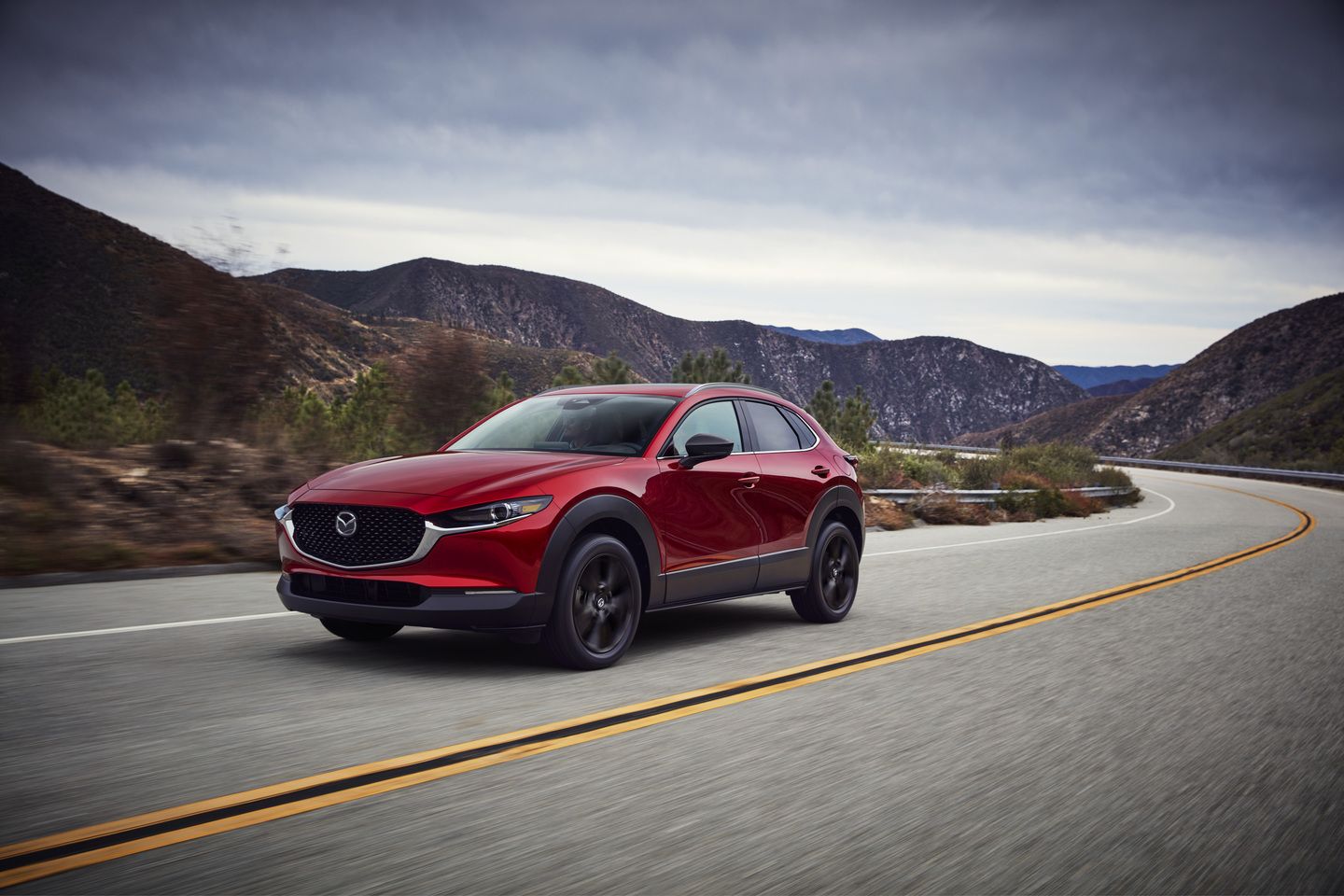
Driving through the Canadian Rockies offers stunning views and challenging terrain—but it also tests your vehicle's performance in ways that city driving never will. At higher elevations, thin air reduces engine power in naturally aspirated vehicles, making climbs feel sluggish and acceleration less responsive. For drivers in Calgary who frequently head to Banff, Canmore, or Lake Louise, this reality is more than theoretical—it's a weekend concern.
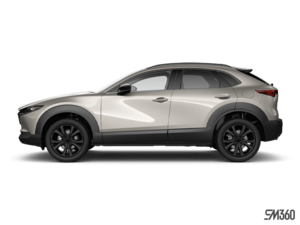
The 2026 Mazda CX-30 GT Turbo addresses this challenge directly. Its turbocharged engine compensates for altitude-related power loss, delivering consistent performance no matter if you're navigating Crowchild Trail or ascending the Trans-Canada Highway toward the Continental Divide. Here's how forced induction changes the high-altitude driving equation for Alberta drivers.
The 2026 CX-30 Turbo's High-Altitude Advantage
The 2026 Mazda CX-30 GT Turbo and GT Kuro Edition Turbo both feature the Skyactiv-G 2.5 Turbo four-cylinder engine. This powertrain produces 250 horsepower and 320 lb-ft of torque on premium 93-octane fuel, or 227 horsepower and 310 lb-ft on regular 87-octane. Maximum torque arrives between 2,000 and 2,500 rpm, providing strong low-end response—exactly what you need when merging onto Highway 1 or climbing steep grades.
When you drive from Calgary to Banff, you gain approximately 350 metres in elevation. A common rule of thumb is that a naturally aspirated engine loses around 3–4% of its power for every 1,000 ft (≈300 m) of elevation gain. For a 186-horsepower engine (like the base CX-30’s Skyactiv-G 2.5), that works out to roughly a 6.5-horsepower drop over this climb. While not catastrophic, it's enough to make overtaking slower vehicles on two-lane sections more challenging.
The CX-30 Turbo's forced induction mitigates this loss. The turbocharger continues compressing air even as atmospheric pressure drops, maintaining closer-to-sea-level performance. You'll notice this most when:
- Passing on Highway 1: The turbo delivers strong mid-range torque for confident overtaking between Lake Louise and Field
- Climbing steep grades: Routes like the Icefields Parkway demand sustained power; the turbo maintains throttle response while non-turbo engines fade
- Merging at altitude: Highway on-ramps near Canmore require quick acceleration—the turbo's low-rpm torque makes this effortless
Real-World Performance in the Rockies
The CX-30 Turbo's advantage becomes most apparent on sustained climbs. Consider the drive from Banff to Lake Louise: you gain another 125 metres over 58 kilometres, with several steep sections. A naturally aspirated vehicle will work harder to maintain highway speed, often requiring downshifts and higher engine speeds.
The turbocharged CX-30 handles this differently. Because peak torque arrives at just 2,000 rpm, the engine doesn't need to rev as high to access its power band. The six-speed automatic transmission holds gears longer, and the vehicle maintains momentum with less effort. This translates to:
- Smoother cruising at highway speeds
- Less frequent downshifting on moderate grades
- More confident acceleration when needed
Standard i-Activ all-wheel drive enhances this capability. The system continuously monitors road conditions and distributes torque to individual wheels, improving traction on gravel pullouts, snowy mountain roads, and wet pavement after summer storms.
Fuel Efficiency Considerations at Altitude

Turbocharged engines often carry a reputation for higher fuel consumption, but altitude changes this equation. At higher elevations, thinner air means the engine ingests less oxygen each cycle, which limits maximum power but can also reduce fuel consumption in steady-state cruising. Turbo engines at altitude may deliver performance closer to sea level while still benefiting from the reduced drag and lower overall load, so real-world fuel economy in the mountains can be closer between turbo and non-turbo than many drivers expect.
For Calgary drivers, this means the CX-30 Turbo's real-world fuel economy on mountain trips may be closer to the naturally aspirated model's figures than you'd expect—while delivering noticeably better performance. The engine runs on regular 87-octane fuel without issue, though premium 93-octane unlocks full output for drivers who want maximum capability.
Turbo vs. Non-Turbo: Key Differences
|
Feature |
CX-30 GX/GS (Non-Turbo) |
CX-30 GT Turbo / GT Kuro Turbo |
|
Engine |
Skyactiv-G 2.5 naturally aspirated |
Skyactiv-G 2.5 Turbo |
|
Horsepower |
186 hp |
227 hp (regular) / 250 hp (premium) |
|
Torque |
186 lb-ft |
310 lb-ft (regular) / 320 lb-ft (premium) |
|
Altitude Performance |
Around 3–4% power loss per 1,000 ft (≈300 m) elevation (rule of thumb) |
Significantly reduced power loss vs non-turbo at typical Rockies elevations |
|
Wheels |
16" or 18" silver alloy |
18" black alloy |
|
Exterior Styling |
Standard badging |
Black mirrors, black-plated badging |
Additional Features for Mountain Driving
Beyond the turbocharged engine, the CX-30 GT and GT Kuro Edition include features that enhance mountain driving:
- Front wiper de-icer: Essential for early-season trips when snow lingers at higher elevations
- Automatic headlight levelling: Adjusts beam angle when the vehicle is loaded or climbing steep grades
- Auto-dimming driver's side mirror: Reduces glare from vehicles behind you on winding mountain roads
- 360° View Monitor (GT): Helpful when parking at crowded trailheads or navigating tight pullouts
The GT Kuro Edition adds distinctive styling with white leatherette seats, grey Leganu inserts, and a Bose 12-speaker premium audio system—ideal for enjoying the drive as much as the destination.
Is the Turbo Worth It for Calgary Drivers?
If your weekends regularly include trips to Banff, Jasper, or the Kananaskis, the turbocharged CX-30 offers tangible benefits. The extra torque and altitude-compensating performance make mountain driving less stressful and more enjoyable. You'll spend less time waiting for safe passing opportunities and more time maintaining your desired pace.
For drivers who rarely leave the city, the naturally aspirated CX-30 remains a capable choice. But if you value responsive performance at elevation—or simply want the strongest version of Mazda's compact crossover—the GT Turbo and GT Kuro Edition deliver.
Experience the CX-30 Turbo at Sunridge Mazda
The 2026 Mazda CX-30 GT Turbo and GT Kuro Edition combine turbocharged performance with Mazda's driver-focused engineering. No matter if you're planning a weekend in the mountains or simply want a more responsive daily driver, the turbo's high-altitude capability makes it a smart choice for Calgary drivers. Visit our team at Sunridge Mazda in Calgary to explore the CX-30 lineup and experience the difference forced induction makes on Alberta's mountain roads.